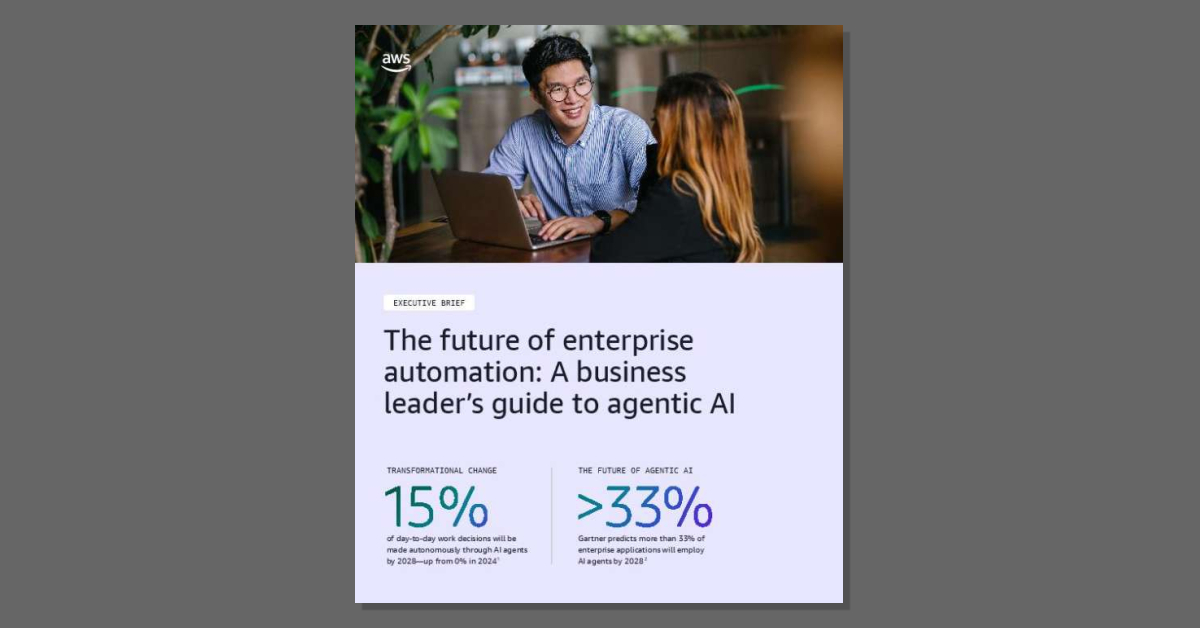
AI agents are software systems designed to reason, plan, and act with minimal human involvement. Unlike traditional generative AI models that respond to isolated prompts, AI agents utilize memory, reasoning, and planning to execute complex workflows. They can solve intricate problems by evaluating outcomes, adjusting strategies, and continuously working towards defined goals, such as managing enterprise applications or conducting code reviews.
How can businesses benefit from agentic AI?
Businesses can experience significant benefits from agentic AI in four main areas: boosting workplace productivity by automating routine tasks, driving research and innovation through data analysis, optimizing business workflows for better efficiency, and accelerating software development by automating code-related tasks. For instance, the NFL reduced new hire training time by 67% using AI agents, while Cognizant achieved over 50% productivity improvements in mortgage compliance workflows.
What approaches exist for implementing intelligent agents?
Organizations can choose between two main approaches for implementing intelligent agents: deploying specialized agents for immediate impact or developing custom agents tailored to specific needs. Specialized agents provide quick value by enhancing functions like customer service, while custom agents allow for flexibility and innovation, leveraging open-source frameworks alongside enterprise-grade security. This dual approach enables businesses to effectively integrate agentic AI into their operations.




 Sign in with LinkedIn